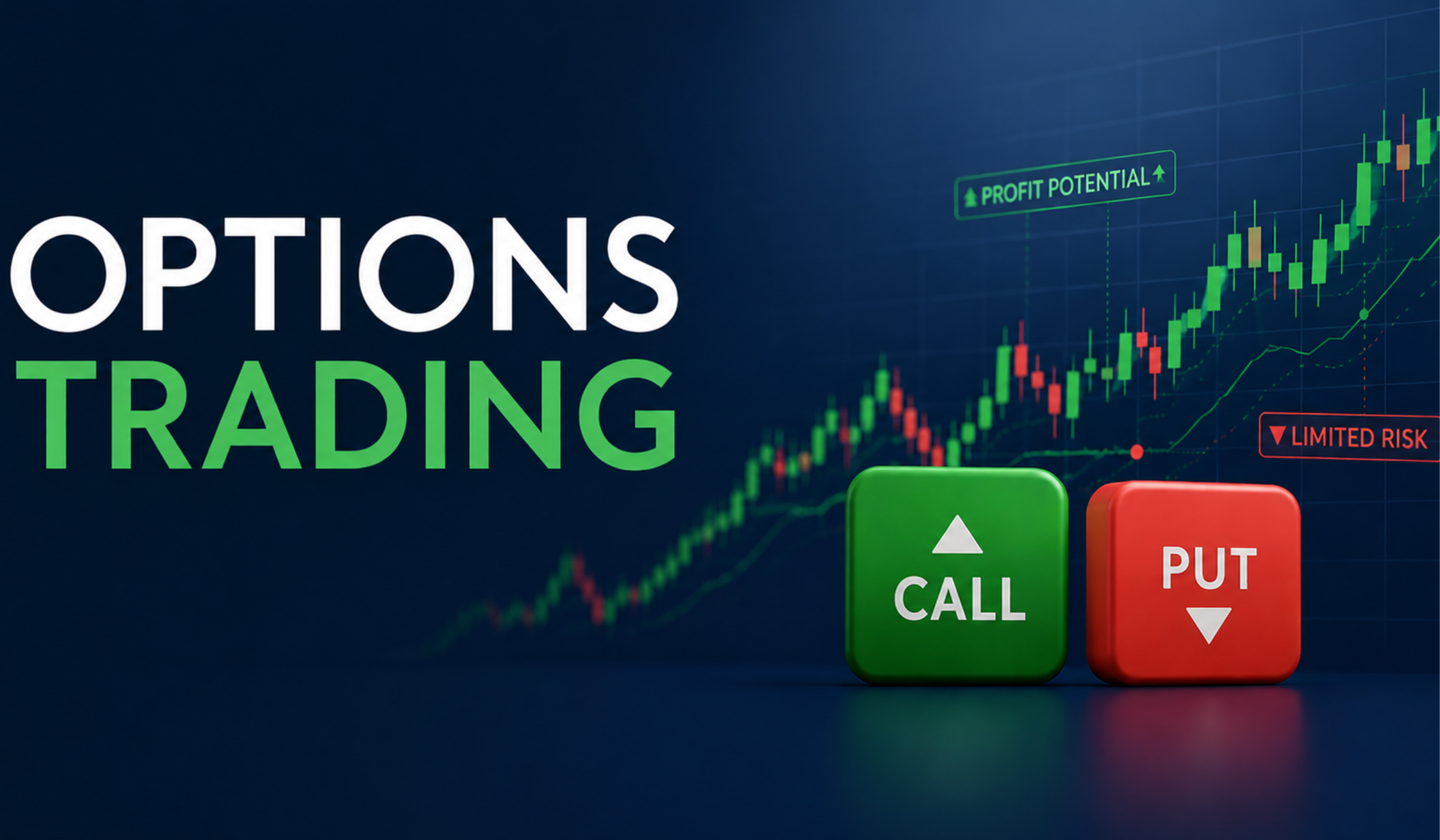
What Influences an Option’s Price
By Eric McArdle on Jan 13, 2026
An option’s value depends on a few key forces that determine how likely it is to end up profitable. The main factors are the stock price, the time remaining until expiration, and implied volatility. Together, these shape what traders call the premium—the amount you pay to buy an option or receive when selling one.
Stock Price
The price of the stock is the biggest factor in determining an option’s value.
-
For a long call option, the option generally increases in value as the stock price rises above the strike price.
-
For a long put option, the option generally increases in value as the stock price falls below the strike price.
As the stock price moves further in the money, the option’s intrinsic value increases. Intrinsic value reflects how far the option’s strike price is below (for a call) or above (for a put) the current stock price.
Time Until Expiration
Every option has a limited lifespan. More time until expiration generally increases an option’s value because there is more opportunity for the underlying price to move in either direction. As expiration approaches, this time value gradually decreases—a process known as time decay, or theta. Time decay tends to accelerate near the end of the option’s life. The portion of an option’s price that reflects time and volatility is called extrinsic value.
Implied Volatility
Implied volatility measures how much the market expects the stock to move. When volatility is high, the market anticipates larger swings, which makes options more expensive because there’s more potential for profit. When volatility is low, expectations are calm and option prices fall.
Analogy: Driving the Market
Stock price: It’s the path the underlying asset follows. As the stock price moves, it changes the option’s relationship to the strike price, similar to how twists and turns in a road affect the direction of a trip. These movements influence the option’s intrinsic value and the likelihood that it may finish in or out of the money
Time: Fuel in the tank. The more time an option has before expiration, the more opportunity there is for the underlying price to move. As expiration approaches, the “fuel” runs low, reducing the remaining time for potential price movement. This decreasing time value—known as time decay—gradually reduces the option’s extrinsic value.
Implied Volatility: Road conditions. Smooth, predictable conditions (low volatility) reflect expectations of smaller price movements and generally lead to lower option premiums. Uncertain or unstable conditions (high volatility)—like rain, fog, or ice—signal the potential for larger swings. When the market anticipates greater movement, option premiums typically rise, much like how insurance costs increase when driving conditions become riskier.
Read more about Basic Option Strategies
Read more about More Options-based Strategies
Read more about Covered Call vs Put Selling
This material is for educational purposes only and does not constitute investment advice or a recommendation of any security, strategy, or product.
Options involve risk and are not suitable for all investors. Prior to trading options, you should carefully read the Characteristics and Risks of Standardized Options (ODD), available from your broker or at www.theocc.com.
Liquid Strategies, LLC (“Liquid”) is an independent investment adviser registered with the U.S. Securities and Exchange Commission (“SEC”) under the Investment Advisers Act of 1940, as amended. Registration as an investment adviser does not imply a certain level of skill or training. Additional information about Liquid, including our investment strategies, fees, and objectives, is available in our Form ADV Part 2A and Form CRS.
The information provided in this material is for informational and educational purposes only and should not be construed as investment, tax, or legal advice, nor as an offer to buy or sell any security, strategy, or product. The content is provided on an “as is” basis without warranties of any kind. Although the information has been obtained from sources believed to be reliable, Liquid does not guarantee its accuracy or completeness and it may be superseded by subsequent market events or other circumstances. Liquid undertakes no obligation to update or revise any information contained herein.
Options involve risk and are not suitable for all investors. Options can be highly volatile, may lower total returns, and even well-structured strategies may result in losses due to market conditions or unforeseen events. Short options strategies involve substantial risk and may expose investors to significant or unlimited losses. Before trading options, investors should carefully review and understand the disclosure document Characteristics and Risks of Standardized Options (ODD), available at www.theocc.com or from your broker.
Educational discussions of strategies—including covered calls, put selling, spreads, protective options, volatility strategies, or execution methods—are intended to illustrate general concepts only. These descriptions are not recommendations, and actual performance will vary depending on market conditions, liquidity, transaction costs, and individual circumstances. Analytical measures and sensitivities such as delta, gamma, theta, and vega estimate sensitivity to inputs but do not predict future results.
Analogies are simplified illustrations intended to help explain options concepts. They may not reflect all risks, characteristics, or market behaviors associated with actual trading or investment strategies.
Investing involves risk, including the potential loss of principal. Past performance is not indicative of, and does not guarantee, future results. No representation is made that any strategy will achieve profits or prevent losses. Investors should consult with qualified financial, legal, and tax professionals before implementing any investment strategy.
© Liquid Strategies, LLC. All rights reserved. Not for further distribution without prior written consent.
You May Also Like
These Related Stories
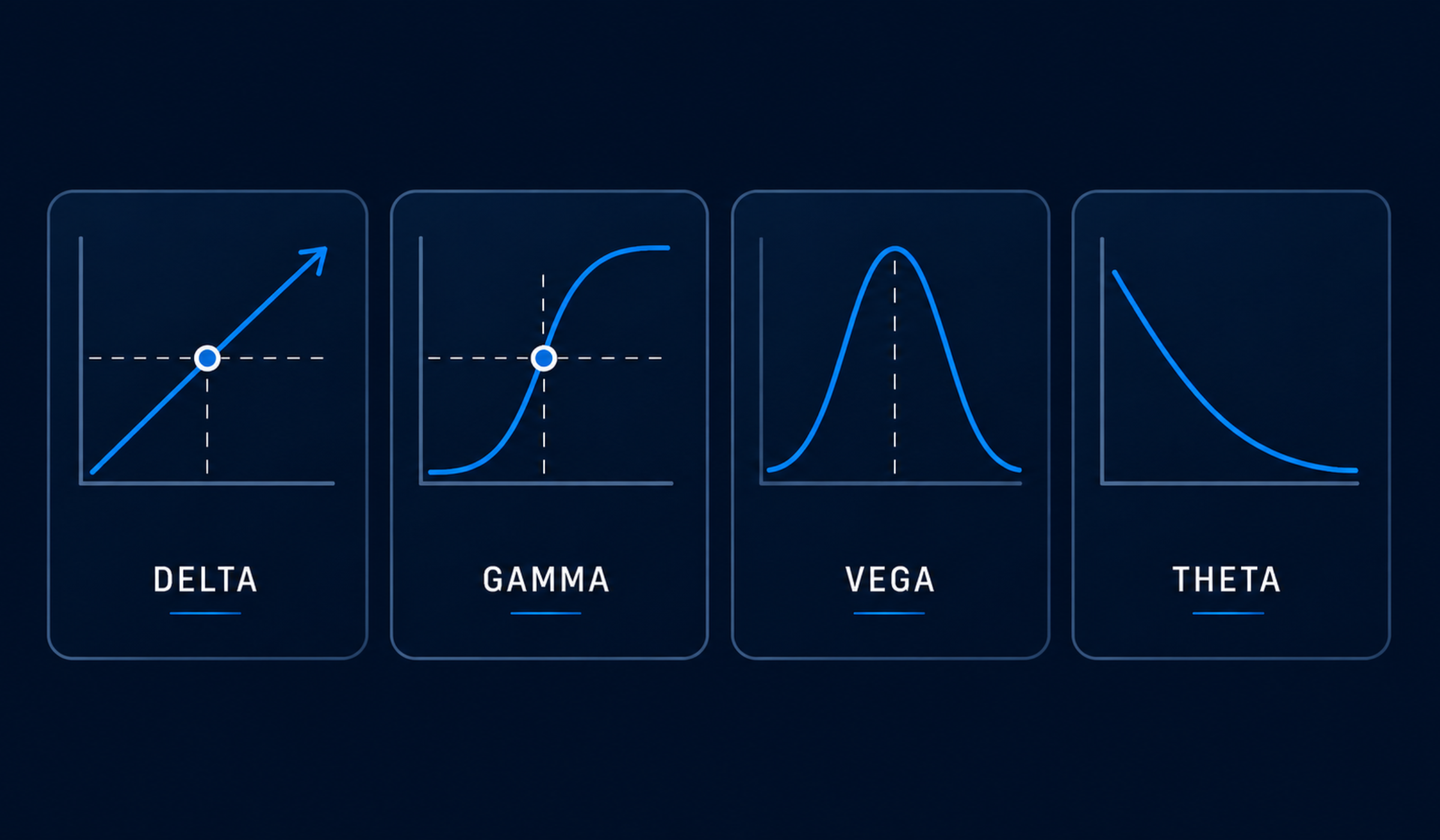
What are Greeks?

Common Options-based Strategies