
By Mark Garfinkel on Apr 27, 2026
-min.jpg)
NIAGARA INCOME OPPORTUNITIES QUARTERLY REVIEW
Dear Investors,
The Fund completed the first quarter of 2026, posting a return of 1.63% (net of fees). During the period, the Fund experienced modest net outflows at the March quarterly redemption window, below the 5% quarterly repurchase offer. Assets under management (AUM) increased from approximately $142 million at year-end 2025 to $156 million as of March 31, 2026. The portfolio management team continues to manage the Fund in accordance with its stated multi-strategy private lending approach, with an ongoing focus on diversification, credit quality, and liquidity management.
With this growth, the firm has added resources and depth to the investment team to enhance our efforts of building, managing, and maintaining a diversified portfolio of niche private lending strategies. As we embark on our third year of managing the Niagara investment strategy, we would like to express our gratitude for your trust and support. We are mindful of the responsibility that trust entails, and it shapes how we approach every decision we make with respect to managing the Niagara Income Opportunities Fund.
Thank you to all our investors and constituents for your support and confidence in our strategy.
Sincerely,
Mark Garfinkel, Connor Allen and the Liquid Strategies Team
FUND SUMMARY
The Niagara Income Opportunities Fund is a continuously-offered, closed-end interval fund with a primary focus on current income generation through investment in a multi-strategy portfolio of private and public credit investments with high current cash yields. The Fund offers daily subscriptions and will offer to make quarterly repurchases at net asset value.
PORTFOLIO STRATEGY
The private credit space spans a broad spectrum of niche lending opportunities. The Niagara portfolio combines different styles of private niche lending strategies into a single portfolio solution. A top priority for the Niagara portfolio team is risk management across three key pillars: 1) diversification; 2) credit management; and 3) liquidity management. This focus enables the team to construct a portfolio with the proper balance of income and risk. These risk management practices are intended to mitigate risk; however, they do not eliminate the risk of loss, and the Fund’s performance will vary based on market conditions, credit events, and manager execution.
Diversification: The Niagara strategy is designed to help reduce the risk of capital loss through diversification by segment, strategy, and the number of loans across the portfolio. In addition, we establish concentration limitations and monitor and evaluate risk exposures across key portfolio metrics.
Credit Management: The portfolio team invests with lending strategy partners who seek to manage downside risk and support capital preservation. The team is committed to seeking the highest quality lending partners that align with our disciplined criteria, including stringent underwriting guidelines, risk mitigation through excess collateralization and strict loan terms and covenants, and a focus on niche, underbanked lending markets.
Liquidity Management: The portfolio team manages portfolio liquidity using a combination of cash equivalents, readily marketable publicly traded securities, and short-duration private investments in order to maintain adequate liquidity. In addition, the team strives to maintain a short average maturity of portfolio investments to provide maximum flexibility with respect to liquidity, while achieving the strategy goals of delivering high income.
PORTFOLIO DEVELOPMENTS
During the first quarter, the Fund realized a successful payoff on one portfolio investment. Proceeds were redeployed, along with new subscriptions, primarily into existing portfolio investments. The portfolio management team deployed these funds, along with incoming capital, across mostly additions to existing portfolio strategy investments. No new strategies were added this quarter, and the focus has been on expanding the pipeline, monitoring existing investments, and ensuring appropriate position sizing. As of the end of the first quarter, the Fund held approximately 50 private credit investments across 21 different strategy partners. This diversification across multiple investments, private credit asset classes, and strategy partners is a key to managing portfolio risk and a basic tenet of the Fund’s approach. As is always the case, the team continues to focus on those areas of the private credit markets that are less crowded and starved for capital, leading to investments that we believe offer solid risk-adjusted returns.
With more than two years of operating history for the Fund, this past quarter was more about building out positions in existing investment strategies, such as BasePoint (asset-based lending), Revere (real estate credit), Tailor Ridge (real estate credit), Chicago Atlantic (cannabis lending), and Delgatto (specialty finance). In addition, the team has been conducting enhanced diligence on existing investments to ensure that those investments are meeting our objectives and performing to expectations. With respect to the Fund’s allocation by category, the real estate credit component of the portfolio continues to grow, increasing from 15.5% to 18.0% from the beginning to the end of the quarter. Lastly, the team continues to build a robust pipeline of other new investment strategies where we can deploy future capital inflows to enhance the overall diversification of the portfolio.
MARKET OVERVIEW
The first quarter of 2026 was defined by a shift in equity market sentiment. Entering the year, with the S&P 500 and other major market indices trading near all-time highs, there was broadly optimistic sentiment about a fourth consecutive year of positive returns. That optimism deteriorated quickly as the quarter progressed with the onset of the Iran conflict. This significant geopolitical event drove a sharp and sustained rise in oil prices, reigniting inflation concerns that the Fed has fought hard to manage for the last couple of years. The potential cost pressures from the rise in oil prices fueled fears that were further impacting a weakening labor market and a weakening consumer.
The VIX (a measure of expected volatility in the S&P 500) opened the year at a modest 14.95, but it ramped and closed the quarter at 25.25, a level that suggests genuine market uncertainty rather than routine volatility. The S&P 500 declined -4.33% for the quarter, with March performance contributing to most of this decline, as the S&P 500 finished down 4.98% for the month. The Fed held the fed funds rate steady at both its January and March meetings, signaling a “wait and see” posture in relation to the labor market and inflation. Recent events certainly will increase the level of complexity in the monetary policy decision-making process for the Fed. For the remainder of 2025, the market, according to the CME FedWatch, is expecting roughly a 25% chance of a single rate reduction in December.
S&P 500 Volatility Index (VIX)
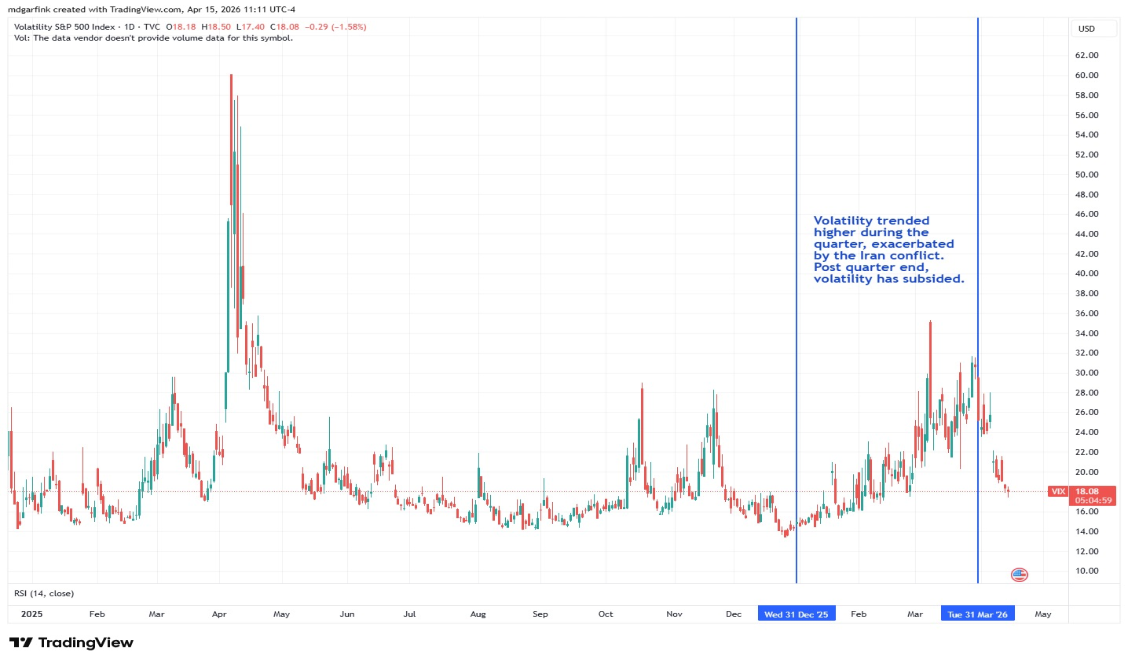
This same equity market volatility was felt within the public and private credit markets as well, with credit spreads widening in both markets. High-yield credit spreads increased by as much as 60 basis points (bps) during the quarter, finishing approximately 47 bps higher for the quarter. This increase in spreads had a negative impact on the pricing of fixed-income securities and can be seen in the performance of various fixed-income benchmarks, whether it is the Morningstar Leveraged Loan Index, which finished at -0.55% for the quarter, or the Bloomberg High Yield Index, which came in at -0.56%.
BofA US High Yield Option-Adjusted Spread*
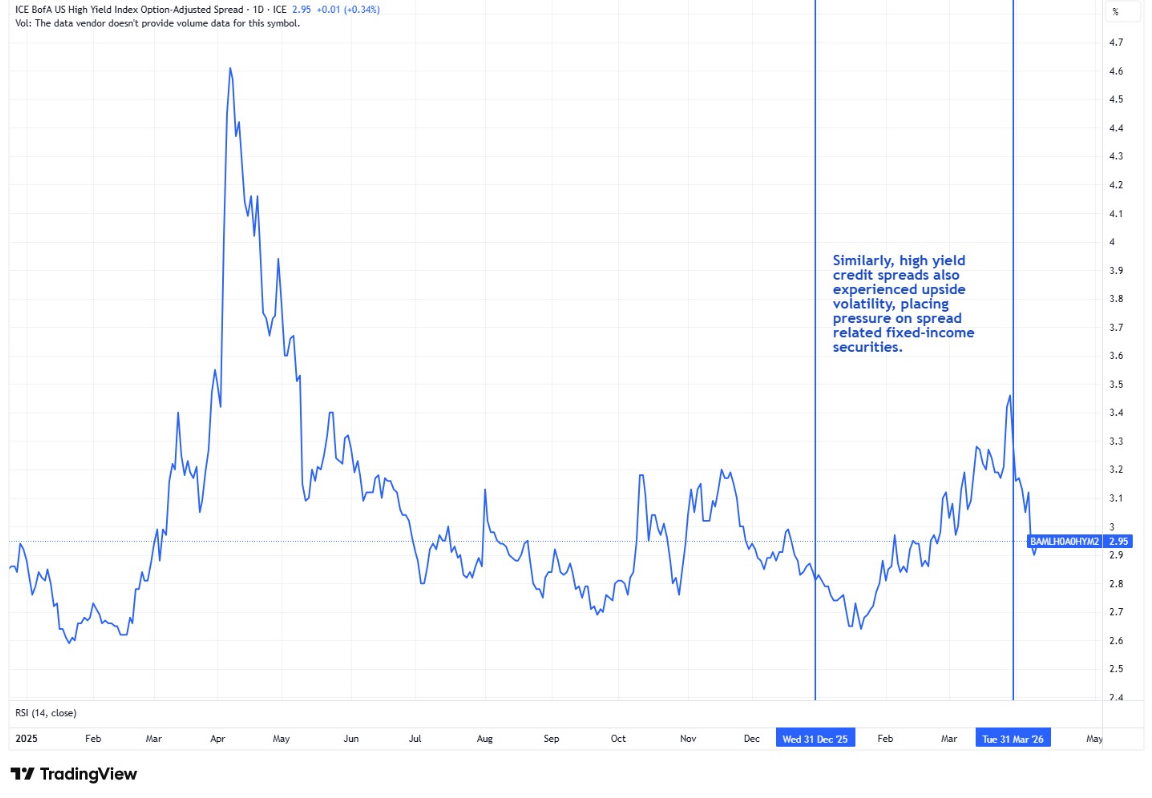
*Option-adjusted spread measures the difference in yield between high-yield bonds and U.S. Treasuries, reflecting perceived credit risk.
Market indices are presented for general market context only and are not indicative of the Fund’s performance or strategy.
PERFORMANCE UPDATE
For the first quarter of 2026, the Niagara Income Opportunities Fund achieved a total return of 1.63% (net of fees), bringing the trailing 12-month total return to 9.61%, compared to the Morningstar Leveraged Loan Index performance of -0.55% and 4.81% for the first quarter and trailing 12 months, respectively. During the quarter, markets experienced higher volatility, rising interest rates, and wider credit spreads, which affected both public and private credit investments broadly. These conditions contributed to changes in the market value of certain portfolio holdings and affected the Fund's quarterly results.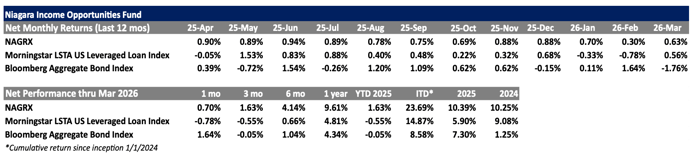
Niagara vs Bloomberg U.S. Aggregate Bond Index1 – Trailing 12 months through March 31, 2026*
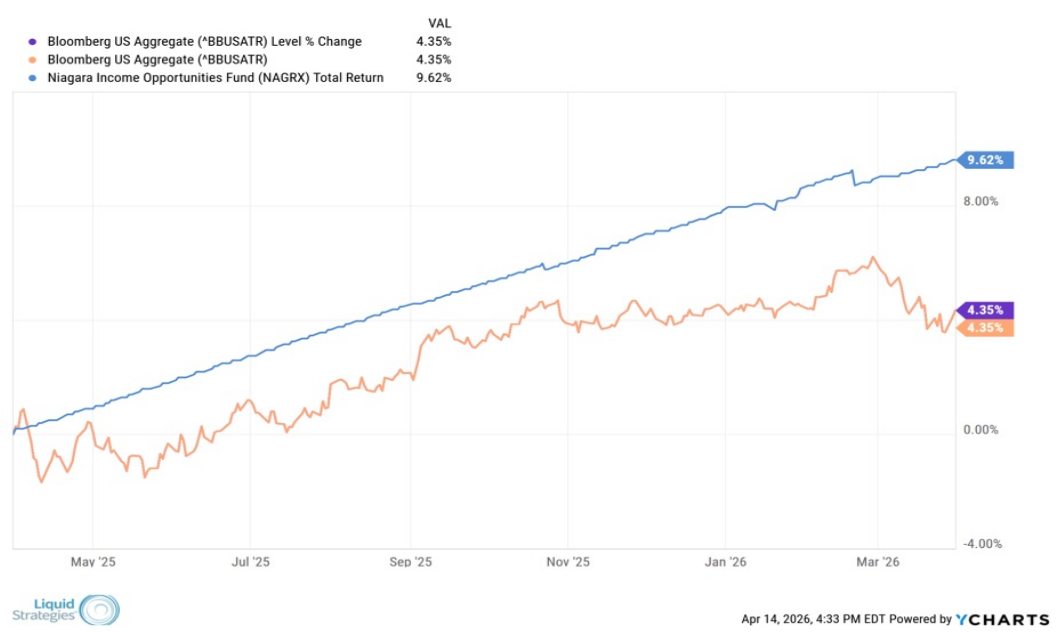
Benchmarks are shown for general market context only and are not directly comparable to the Fund due to differences in investment strategy, asset composition, liquidity, risk profile
Past performance is no guarantee of future results | *returns are net of fees
An investment in the Fund involves risk, including the possible loss of principal. Past performance is not indicative of future results.
PORTFOLIO MANAGEMENT TEAM COMMENTARY AND OUTLOOK
Despite the recent wave of negative headlines—ranging from tightening bank financing to concerns around liquidity, software exposure, and redemption pressures—the underlying reality in private credit remains far more nuanced. The asset class has matured into a core allocation for institutional and high-net-worth investors, and much of the scrutiny reflects its newfound position. Private lending still represents a relatively small portion of the broader global fixed-income market, and importantly, the majority of capital is housed in long-duration, closed-end or vehicles designed with liquidity and redemption features consistent with underlying assets, limiting the kind of liquidity-driven contagion often implied in recent media narratives. In many cases, the perceived risks—AI disruption, underwriting deterioration, or rising defaults—are either sector-specific or, in our opinion, overstated.
What is often lost in the headlines is that private lending, in general and by design, occupies a fundamentally different position than public credit markets. Senior secured, directly negotiated loans with covenant protections and/or collateral backing continue to provide lenders with both downside protection and consistent contractual income streams. Default rates have historically remained competitive relative to public markets.
At the same time, the current environment is creating a wider dispersion of outcomes across managers and strategies. Risk is increasingly concentrated in larger, more competitive segments of the market—particularly in covenant-lite, sponsor-driven upper middle market and software-heavy transactions—while more fragmented areas such as the lower middle market continue to offer attractive relative value. These less efficient segments benefit from reduced competition, stronger documentation, and pricing power, resulting in higher spreads and more favorable structures. Manager selection, therefore, has become a primary driver of returns, as experienced lenders with disciplined underwriting processes are better positioned to navigate credit cycles and avoid concentrated risks.
This dynamic aligns with the investment approach of the Niagara Income Opportunities Fund. Rather than competing exclusively in more heavily trafficked segments of direct lending, the Fund employs a multi‑strategy approach that seeks exposure to a range of asset‑based, specialty finance, and other smaller direct lending markets that may exhibit varying degrees of competition and efficiency. These markets can involve greater complexity, limited lender participation, and customized capital solutions, which may influence pricing, structure, and risk characteristics. The Fund’s portfolio emphasizes diversification and collateralized lending.
Ultimately, the disconnect between headlines and fundamentals presents a compelling opportunity. As capital becomes more selective and risk is repriced, strategies that emphasize discipline, structural alignment, and access to less efficient markets should continue to differentiate. In our view, private lending is not approaching a systemic inflection point, but rather entering a phase where portfolio construction and access to differentiated lending markets may influence outcomes, particularly for platforms operating in less centralized segments of the market.
ASSET CATEGORY BREAKDOWN
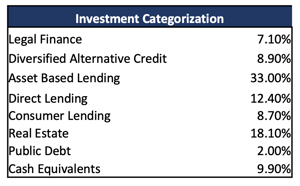
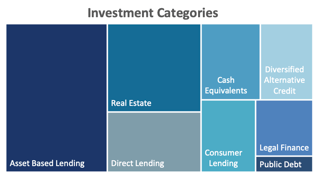
PORTFOLIO CHARACTERISTICS
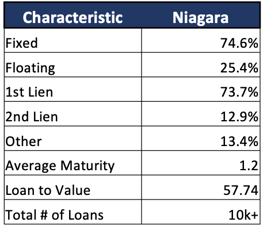
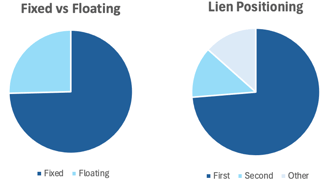
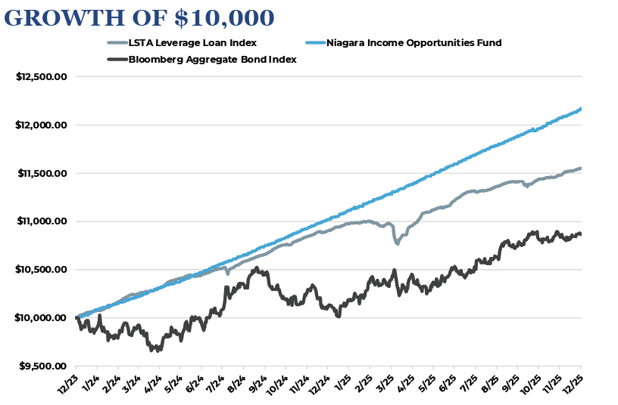
Net of fees | Since inception 12/28/2023 | Past performance is no guarantee of future results
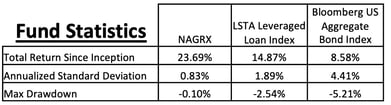
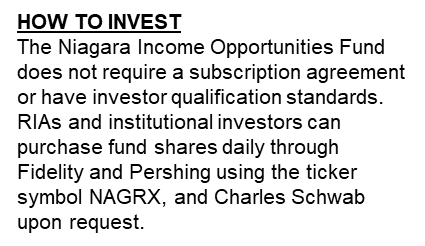 The Fund also offers quarterly redemption opportunities subject to applicable terms and fund conditions.
12/28/23 – 3/31/26 | Returns are net of fees
1Measures the performance of the broad U.S. investment-grade bond market
DISCLOSURES
An investment in the Fund’s shares is subject to risks. The value of the Fund’s investments will increase or decrease based on changes in the prices of the investments it holds. This will cause the value of the Fund’s shares to increase or decrease. You could lose money by investing in the Fund. By itself, the Fund does not constitute a complete investment program. Before investing in the Fund, you should consider carefully the following risks the Fund faces, together with the other information contained in this prospectus.
Since the Fund is non-diversified, it is subject to higher reduction of capital and volatility than a fund more proportionately allocated among a large number of securities. An investment in the Fund involves risk. The Fund is new with no significant operating history by which to evaluate its potential performance. There can be no assurance that the Fund’s strategy will be successful. The Fund may use leverage its investments by “borrowing.” The use of leverage increases both risk of loss and profit potential.
-
Shares of the Fund are not listed on any securities exchange, which makes them inherently illiquid.
There is no secondary market for the Fund’s shares, and it is not anticipated that a secondary market will develop. -
Shares of the Fund are not redeemable. Thus, an investment in the Fund may not be suitable for investors who may need the money they invest in a specified time frame.
-
Although the Fund will offer to repurchase at least 5% of outstanding shares on a quarterly basis in accordance with the Fund’s repurchase policy, the Fund will not be required to repurchase shares at a shareholder’s option nor will shares be exchangeable for units, interests or shares of any security.
-
The Fund is not required to extend, and shareholders should not expect the Fund’s Board of Trustees to authorize, repurchase offers in excess of 5% of outstanding shares.
-
Regardless of how the Fund performs, an investor may not be able to sell or otherwise liquidate his, her or its shares whenever such investor would prefer and, except to the extent permitted under the quarterly repurchase offer, will be unable to reduce the shareholder’s exposure on any market downturn.
Private Credit and Liquidity Considerations
Investments in private credit involve risks that differ from publicly traded investments, including limited liquidity, borrower default risk, and valuation uncertainty. Private credit investments may not be easily sold or redeemed, and investors may not have access to capital when desired. Reported valuations may be based on estimated fair value and may not reflect the price at which an investment could be sold.
Past market conditions and performance do not guarantee future results. An investment in private credit may result in the loss of some or all invested capital.
Liquid Strategies LLC (“Liquid”) is an independent investment adviser registered under the Investment Advisers Act of 1940, as amended. Registration does not imply a certain level of skill or training. More information about Liquid, including our investment strategies, fees and objectives, can be found in our Form ADV Part 2A and our Form CRS.
Distributed by Foreside Fund Services, LLC, which is not affiliated with the Adviser
NIAGARA INCOME OPPORTUNITIES FUND QUARTERLY REVIEW | As of September 30, 2025
NIAGARA INCOME OPPORTUNITIES FUND QUARTERLY REVIEW | As of December 31, 2025