By Connor Allen on Jan 27, 2026

DENALI STRUCTURED RETURN STRATEGY FUND - QUARTERLY REVIEW
Thank You
2025 was a meaningful year for us as a firm and for our interval fund platform. We crossed $1.4 billion in assets under management, and our interval funds are quickly approaching $300 million in total assets. That growth reflects the confidence our investors have placed in us, and we do not take that lightly.
This year was also an important one for the Denali Structured Return Strategy Fund (DNLIX). The fund performed very well in the first quarter, which was the first quarter since the fund’s launch in which the S&P 500 declined. During that period, Denali held up as intended and demonstrated relative downside mitigation compared to the S&P 500 during that period. Later in the year, the S&P 500 exceeded Denali’s cap level, which resulted in relative underperformance during the second and third quarters. Taken together, these outcomes helped demonstrate how the strategy is designed to work across different market conditions.
We are deeply grateful to our investors for the trust you place in us. We are excited about what lies ahead for the firm and remain focused on executing our strategy for those who invest alongside us. We believe we have built a set of compelling strategies designed to solve real portfolio challenges, and we look forward to continuing that work in the years to come.
Thank you for your continued confidence and partnership.
Sincerely,
Connor Allen, Mark Garfinkel and the LS Team
FUND OVERVIEW
The Denali Structured Return Strategy Fund (DNLIX) seeks to provide investors with income and capital appreciation through direct and indirect investments in income-producing assets, primarily comprising private credit, combined with a small investment (1%–3% of total assets) in call option spreads on the S&P 500 Index.
Income-generating investments may be publicly traded or privately offered and typically make interest, dividend, or other periodic payments, distributions, and/or accruals. The Fund utilizes the income from the diversified pool of income-generating investments to systematically purchase quarterly S&P 500 call option spreads, providing defined exposure to potential market gains from the S&P 500 Index.
Each quarter, the Fund resets its exposure with the goal of harvesting any realized equity upside. The Fund is structured as a continuously offered, non-diversified interval fund. The Fund offers daily subscriptions and will offer to make quarterly repurchases at NAV (net asset value).
MARKET REVIEW
As of the end of 2025, all major asset classes were clustered near all-time highs across equity and fixed income.
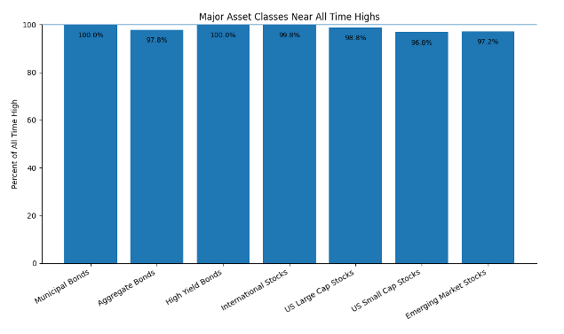
Percent of prior peak as of year-end, 2025.
Indexes used: Bloomberg Municipal Bond Index (U.S. munis); Bloomberg U.S. Aggregate Bond Index (U.S. investment-grade bonds); ICE BofA U.S. High Yield Index (U.S. high yield corporates); MSCI EAFE Index (developed international equities); S&P 500 Index (U.S. large cap equities); Russell 2000 Index (U.S. small cap equities); MSCI Emerging Markets Index (emerging market equities). Source: YCharts.
To end the year within 5% of all time highs across all major asset classes was a dramatic shift that few people saw coming back in April following Liberation Day. At that time, global markets were reeling from widespread drawdowns, with equities and bonds struggling amid the heightened volatility and uncertainty. But, as evidenced by the chart above, markets rebounded quickly and stabilized by the end of the year.
INTERNATIONAL DOMINANCE
This year’s widespread strong performance was led by international stocks, which outperformed the U.S. for the first time in over a decade. This rotation was in large part driven by a weaker U.S. dollar and a narrowing valuation gap rather than any fundamental changes.
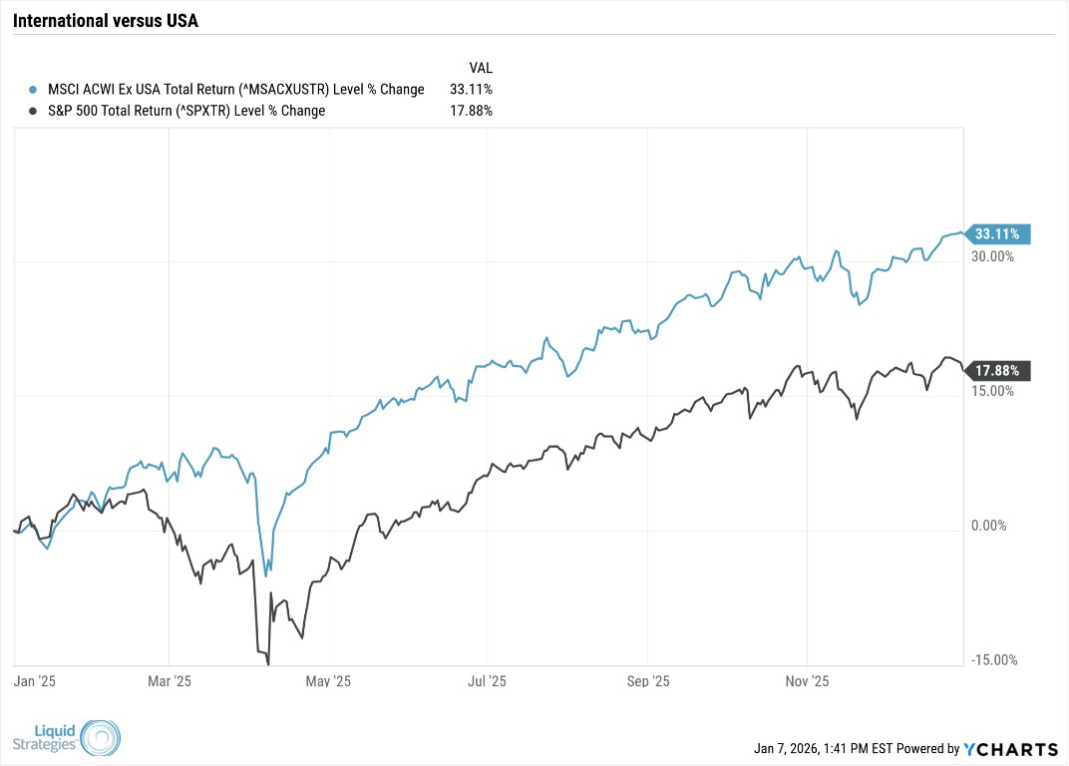
MSCI ACWI ex USA Total Return Index (MSACXUST): A benchmark for global stocks outside the United States, covering developed + emerging markets (ex-U.S.)
S&P 500 Total Return Index (SPXTR)
A benchmark for U.S. large-cap equities (500 leading U.S. companies)
CONTINUED CONCENTRATION
Another important theme in 2025 was the continued concentration within the S&P 500. While the index delivered strong returns, a disproportionate share of those gains came from a relatively small group of large tech and AI-related companies. Although concentration can support index-level returns for a time, it reinforces the importance of diversification.
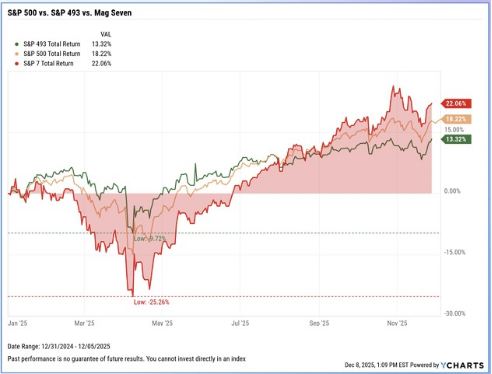
S&P 500 Total Return = U.S. large-cap stocks including dividends | S&P 493 Total Return = S&P 500 excluding the Magnificent Seven (remaining 493 stocks) | S&P 7 Total Return = Magnificent Seven stocks
INTEREST RATE CUTS
Interest rate cuts were another defining feature of the market environment in 2025. The Federal Reserve lowered rates further even as the economy remained resilient. Unlike past easing cycles that began during a crisis, these cuts were largely precautionary, responding to signs of cooling in the labor market rather than outright economic stress. Short-term rates moved lower, as expected, while longer-term yields remained relatively stable, steepening the yield curve.
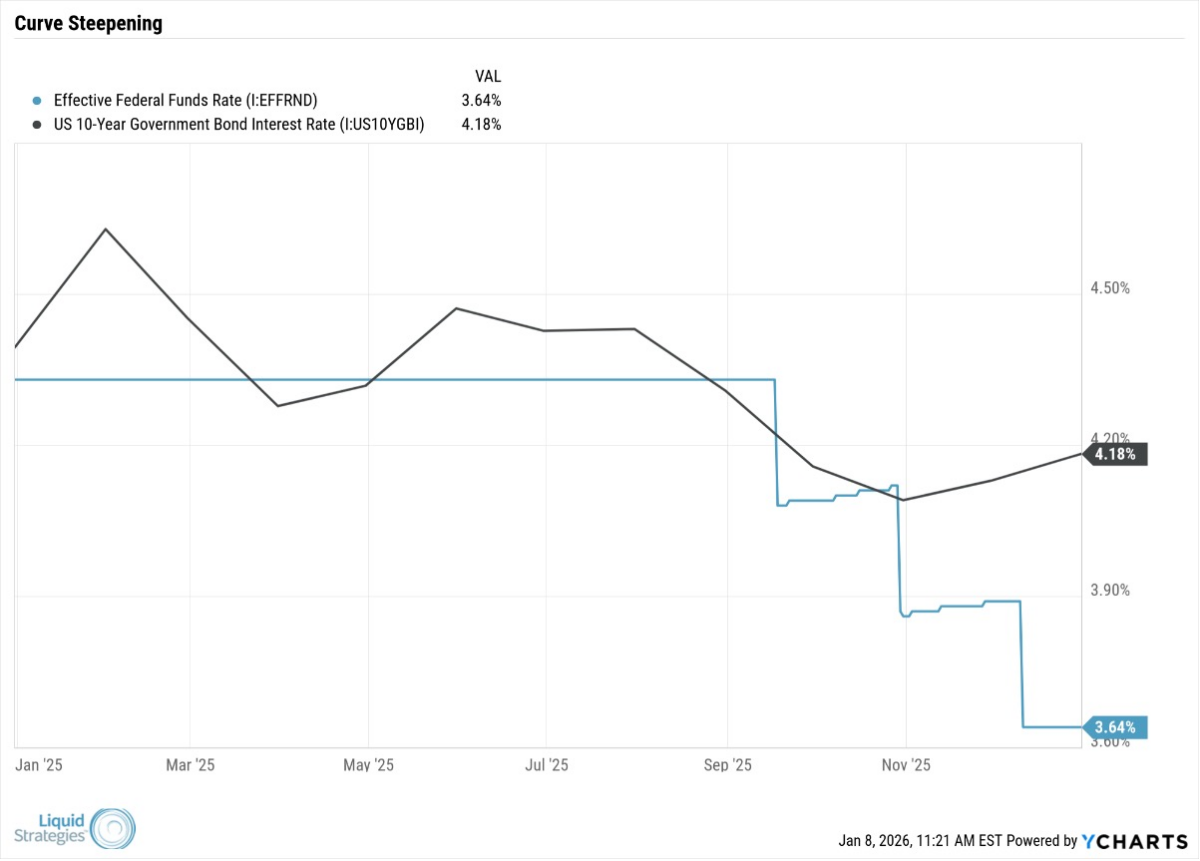
Rates shown are market interest rates (gross; not net of fees/expenses)
A YEAR IN REVIEW
2025 was a year in which the Fund demonstrated its ability to outperform during periods of market stress while continuing to participate meaningfully in rising equity markets. As investors know, Denali is designed to narrow the range of outcomes typically associated with direct exposure to the S&P 500. On a quarterly basis, the strategy seeks to provide meaningful downside risk mitigation, and in return, the Fund caps a portion of potential upside. Historically, quarterly upside participation has been capped at approximately 5%.
Despite this structural trade-off, the Fund delivered a capture ratio of 3.46 in 2025, a non-standard performance metric comparing relative upside and downside movements versus the S&P 500.
| Symbol | 1 Month | 3 Month | Year to Date | Since Inception |
| DNLIX | 0.39% | 2.34% | 12.51% | 15.21% |
| SPXTR | 0.06% | 2.66% | 17.88% | 17.72% |
*Inception date of March 12, 2024 | net of fees | Source: Ycharts
*Capture ratio compares the Fund’s quarterly returns to the S&P 500 during positive and negative market periods over the same timeframe. Methodology and results may vary and are not indicative of future performance
During the year, the team also enhanced its investment and underwriting capabilities with the addition of a dedicated analyst, supporting continued portfolio oversight and scalability as the strategy grows.
Q1 REVIEW
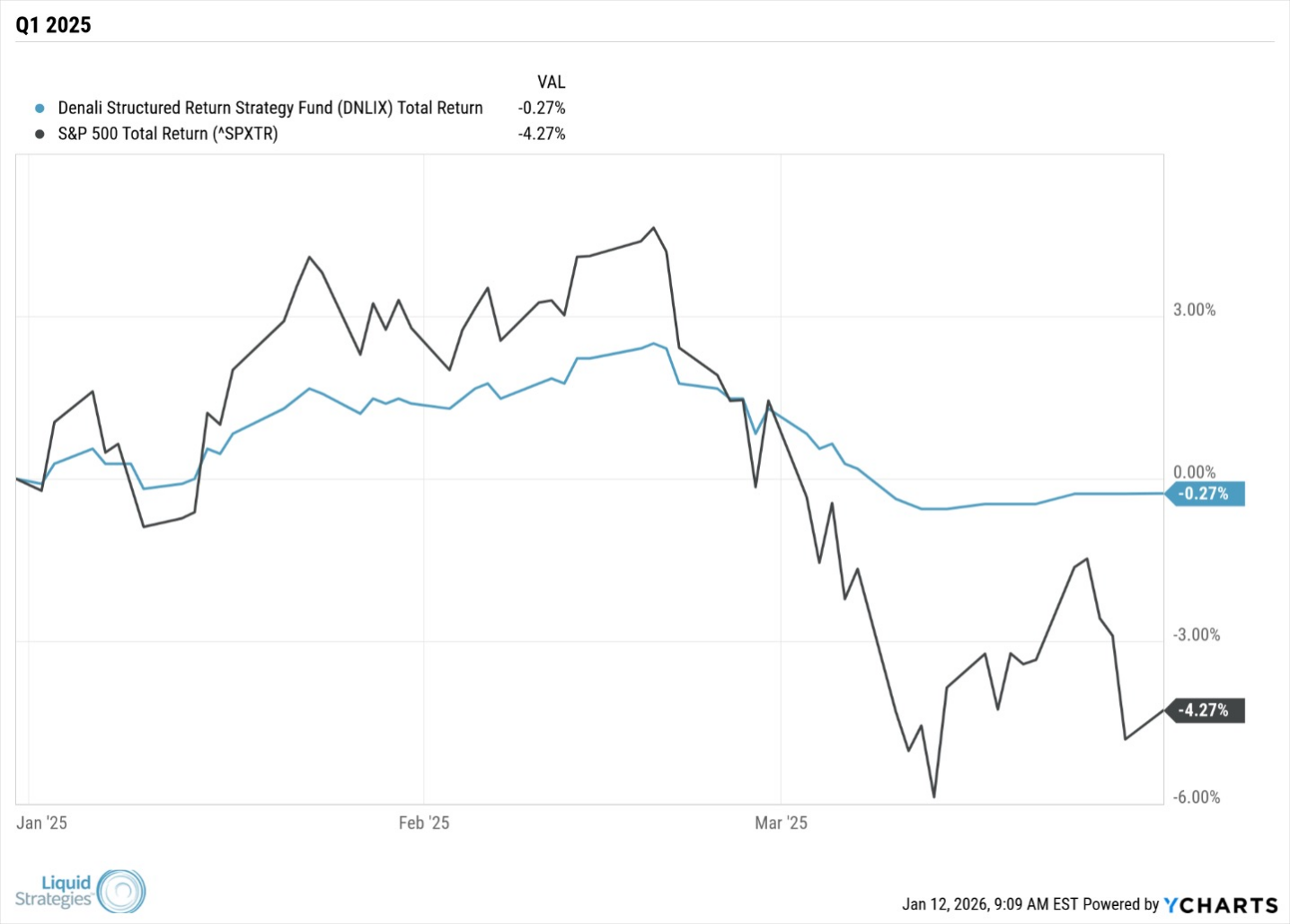
Q1 was the first calendar quarter in which the S&P 500 declined since Denali launched in Q1 2024. During this challenging environment, the Fund demonstrated its intended value proposition by effectively mitigating the downside risk of the equity market. The S&P 500 declined -4.27%, while the Fund limited its loss to -0.27%, underscoring our strategy’s emphasis on downside risk mitigation during periods of market stress.
Q2 REVIEW
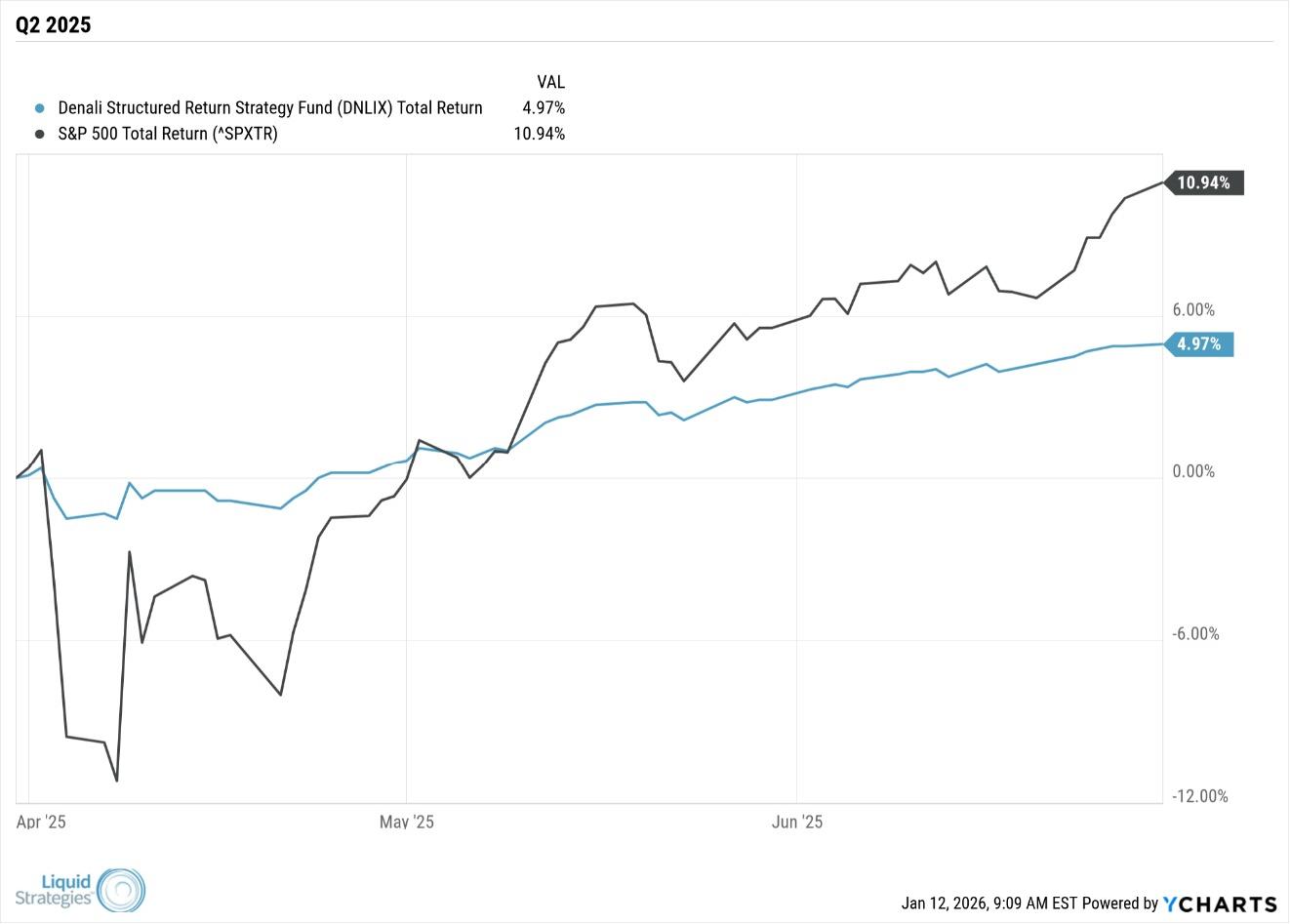
Denali’s performance in Q2 2025 underscored the importance of effective downside risk mitigation. During the sharp equity selloff from February 19 to April 8, when the S&P 500 declined by 18.75%, the Fund experienced a modest drawdown in comparison to 4.17%. This downside resilience is largely attributable to Denali’s limited exposure to the S&P 500, as well as the steady performance of its diversified private credit portfolio.
The Fund’s return trailed the S&P 500’s recovery from this drawdown and resulted in nearly 6% relative underperformance for the quarter. This was attributable to the “cap level” or short call option, which limits upside participation in the S&P 500 beyond the strike price.
Q3 REVIEW
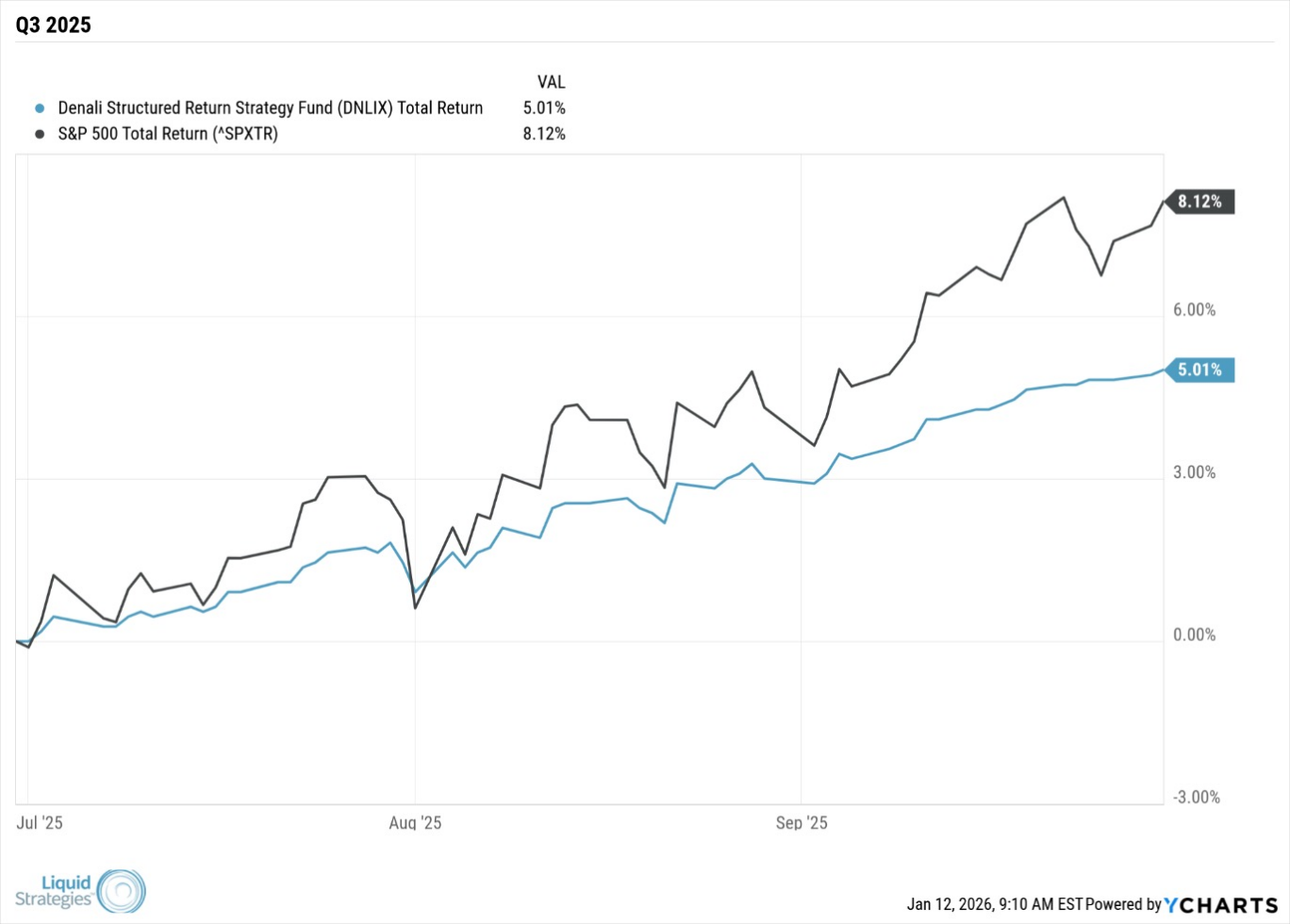
Fund performance is shown net of fees and expenses. Index performance is shown gross (does not reflect fees/expenses)
During Q3, the S&P 500 gained 8.12%, while the Denali Structured Return Strategy Fund returned 5.01%. As designed, Denali captured its full upside potential for the period through its approximately 5% capped S&P 500 call spread. Q3 was the second consecutive quarter in which the Fund reached its cap, resulting in modest underperformance relative to the broader market during the strong rally from the April lows.
Q4 REVIEW
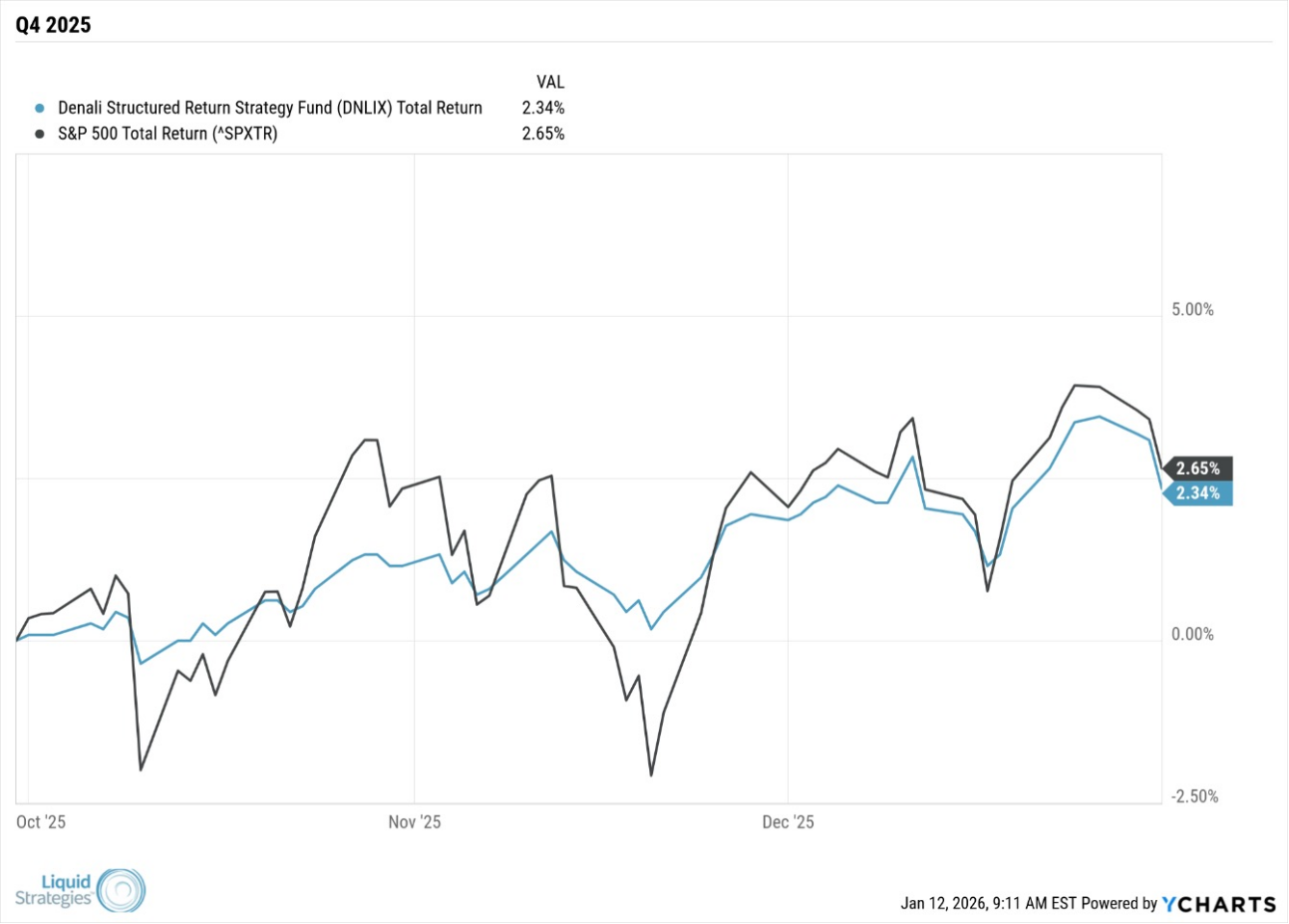
Fund performance is shown net of fees and expenses. Index performance is shown gross (does not reflect fees/expenses)
Q4 was the first quarter of the calendar year in which the S&P 500 was range bound in the sub +5% level. This allowed Denali to participate in most of the S&P 500’s upside for the quarter without hitting its upside cap. The modest underperformance was a function of the private credit portfolio not fully delivering its expected income to offset the spend of the options at the beginning of the quarter.
LOOKING AHEAD TO 2026
One of Denali’s key structural features is its ability to reset both the lower and upper strike levels each quarter, which effectively acts as the strategy’s floor and cap for each quarter, as outlined in the Fund’s prospectus. For the first quarter of 2026, Denali established an S&P 500 call spread with strikes at 6,860 and 7,200, providing approximately 5% of upside participation potential from the lower strike level for the quarter.
Alongside the options strategy, the underlying private credit portfolio continues to expand and diversify across both new and existing market segments. This ongoing diversification can help reduce concentration risk at both the issuer and sector level, while supporting consistent income generation needed for the strategy.
Following a strong year of performance in 2025, we believe Denali is well positioned entering 2026 and remain focused on disciplined execution across both the options and private credit components of the strategy.
This commentary contains performance information and should be read together with the risk disclosures at the end of this document.
An investment in the Fund’s shares is subject to risks. The value of the Fund’s investments will increase or decrease based on changes in the prices of the investments it holds. This will cause the value of the Fund’s shares to increase or decrease. You could lose money by investing in the Fund. By itself, the Fund does not constitute a complete investment program. Before investing in the Fund, you should consider carefully the following risks the Fund faces, together with the other information contained in the prospectus.
Since the Fund is non-diversified, it is subject to higher reduction of capital and volatility than a fund more proportionately allocated among a large number of securities. An investment in the Fund involves risk. The Fund is new with no significant operating history by which to evaluate its potential performance. There can be no assurance that the Fund’s strategy will be successful. The Fund may use leverage in its investments by “borrowing.” The use of leverage increases both risk of loss and profit potential.
- Shares of the Fund are not listed on any securities exchange, which makes them inherently illiquid.
There is no secondary market for the Fund’s shares, and it is not anticipated that a secondary market will develop. - Shares of the Fund are not redeemable. Thus, an investment in the Fund may not be suitable for investors who may need the money they invest in a specified time frame.
- Although the Fund will offer to repurchase at least 5% of outstanding shares on a quarterly basis in accordance with the Fund’s repurchase policy, the Fund will not be required to repurchase shares at a shareholder’s option nor will shares be exchangeable for units, interests or shares of any security.
- The Fund is not required to extend, and shareholders should not expect the Fund’s Board of Trustees to authorize, repurchase offers in excess of 5% of outstanding shares.
- Regardless of how the Fund performs, an investor may not be able to sell or otherwise liquidate his, her or its shares whenever such investor would prefer and, except to the extent permitted under the quarterly repurchase offer, will be unable to reduce the shareholder’s exposure on any market downturn.
The Fund may invest a portion of its assets in securities that have speculative characteristics, e.g., lower-rated or unrated debt commonly referred to as “high yield bonds” or “junk bonds.” The Fund will invest in call option spreads that may expire worthless and fail to provide participation in positive equity market returns.
Investors should consider the investment objectives, risks, charges, and expenses carefully before investing. The prospectus contains this and other important information about the investment company. For a prospectus or summary prospectus with this and other important information about the Fund, please visit the Documents section at www.LSfunds.com/DNLIX or call 1-800-632-4027. Read the prospectus carefully before investing.
Call Option Spreads: The Adviser uses call option spreads to capture a portion of positive equity market returns without exposing the Fund to significant equity market losses. Call options can expire worthless in a flat or down equity market, but are not further linked to equity losses. By using a call spread strategy, the Fund does not hold the constituents of the S&P 500® Index and therefore is not exposed to equity market losses beyond the net cost of the call options. The Adviser anticipates investing in call spreads on a quarterly basis by investing primarily in call options with three-month maturities and strike prices that are near (within one percent above) the then-current level of the S&P 500® Index while writing the same amount of call options with three-month maturities and strike prices that are approximately 5% higher than the then-current level of the index. The Fund's purchases of call spreads are intended to allow the Fund to participate in increases in the S&P 500® Index up to approximately 5% during the term of the call spread. The purchased call options are commonly referred to as being at-the-money if the strike price is at the then-current level of the index, or out-of-the money if the strike price is above the then-current level of the index. The Adviser considers relative call prices when fine tuning the strike prices selected. The Fund's Adviser attempts to use strike prices of purchased and written options that will result in a net cost to the Fund of approximately one and a half to three percent of total assets. The Adviser may purchase over-the-counter options, but only from counterparties it considers credit worthy. The Adviser considers a counterparty credit worthy if rated at least Baa3 by Moody's or at least BBB by S&P, or,. if unrated, determined by the Adviser to be of similar credit quality.
Liquid Strategies, LLC (“Liquid”) is an independent investment adviser registered with the U.S. Securities and Exchange Commission under the Investment Advisers Act of 1940, as amended. Registration as an investment adviser does not imply any specific level of skill or training. Additional information about Liquid, including our investment strategies, fees, and objectives, is available in our Form ADV Part 2A and our Form CRS.
All content is provided on an “as is” basis without warranties of any kind. While the information has been obtained from sources believed to be reliable, Liquid Strategies, LLC does not guarantee its accuracy or completeness, and it may be superseded by subsequent market events or other circumstances. We undertake no obligation to update or revise any information contained herein.
Options trading involves significant risk and is not suitable for all investors. Options can be highly volatile, may lower total returns, and even well-structured strategies may result in losses due to market conditions or unforeseen events. Before engaging in options trading, investors should carefully review and understand the disclosure document Characteristics and Risks of Standardized Options, available at www.theocc.com.
Investing involves risk, including the potential loss of principal. Past performance is not indicative of, and does not guarantee, future results. Investors should consult with a qualified financial and/or tax professional before implementing any investment strategy.
Distributed by Foreside Fund Services, LLC
DENALI STRUCTURED RETURN STRATEGY FUND QUARTERLY REVIEW | As of September 30, 2025
DENALI QUARTERLY FUND REVIEW | As of September 30, 2024